




Forged Wheels vs Cast Wheels: Complete Guide

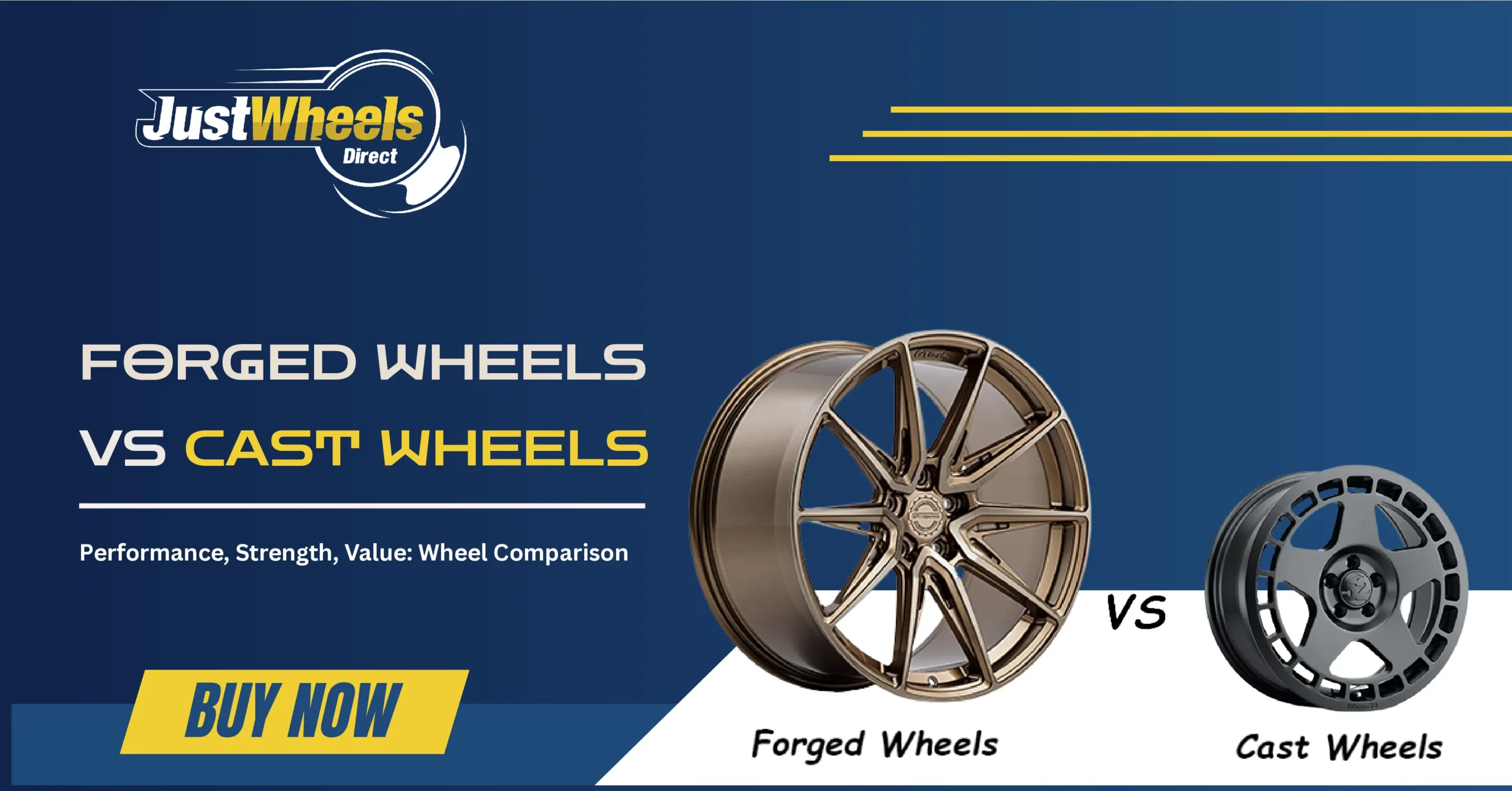
If you are shopping for new wheels, the choice between forged wheels vs cast wheels is the most important decision you will make.
The wrong pick can cost you money, hurt your car’s performance, or leave you with a wheel that cracks on a rough road.
This guide breaks down everything you need to know: how each wheel is made, how they perform, what they cost, and which one is right for your car and budget.
By the end, you will know exactly what to buy and why.
Table of Contents
ToggleWhat Are Cast Wheels?
Cast wheels are the most common type of aftermarket wheel sold in the US. They are made by pouring molten aluminum into a mold and letting it cool into shape.
How Cast Wheels Are Made
The process is simple. Liquid aluminum is heated until it melts. It is then poured or pushed into a pre-shaped mold. Once it cools, the wheel is removed, finished, and painted.
There are two main types of cast wheels:
Gravity Cast Wheels
- The cheapest and most common method
- Molten aluminum flows into the mold using gravity alone
- Produces a slightly less dense structure
Low-Pressure Cast Wheels
- Aluminum is pushed into the mold under low pressure
- Results in a denser, slightly stronger wheel
- Costs a little more than gravity cast
Why Cast Wheels Are Popular
Cast wheels are everywhere for good reasons:
- They are affordable, often starting under $100 per wheel
- They come in hundreds of styles and sizes
- They fit most cars, trucks, and SUVs right off the shelf
What Are Forged Wheels?
Forged wheels are made using a completely different process. Instead of pouring liquid metal, manufacturers start with a solid block of aluminum and compress it under extreme pressure.
How Forged Wheels Are Made
A billet of aluminum alloy is placed in a massive press. That press applies thousands of tons of force, squeezing the metal into a dense, tight shape. The wheel blank is then machined to its final form using CNC equipment.
This process aligns the metal’s grain structure, making the wheel far stronger than one that was simply poured into a mold.
Materials Used in Forged Wheels
Most forged wheels use high-grade 6061 or 7075 aluminum alloys. These are the same alloys used in aerospace components. They offer a superior strength-to-weight ratio compared to standard casting alloys.
Why Forged Wheels Are Considered Premium
- They are significantly lighter than cast wheels
- They are much stronger at the same or lower weight
- They are used on race cars, supercars, and performance builds
Forged Wheels vs Cast Wheels: Key Differences
Here is a direct comparison of the most important factors:
| Factor | Forged Wheels | Cast Wheels |
| Manufacturing | High-pressure compression | Molten aluminum poured into mold |
| Weight | Lighter (up to 20% less) | Heavier |
| Strength | Very high | Moderate |
| Crack resistance | Excellent | Good (varies by type) |
| Price | $300 to $1,500+ per wheel | $50 to $300 per wheel |
| Customization | Limited (higher cost) | Wide variety available |
| Best use | Performance, racing, luxury | Street driving, budget builds |
Manufacturing Process Comparison
Cast wheels are shaped by cooling liquid metal. Forged wheels are shaped by compressing solid metal. Forging removes internal air pockets and voids that casting can leave behind.
Strength and Structural Integrity
Forged wheels are stronger because the metal grain runs continuously through the wheel. Cast wheels can have micro-voids from the cooling process, which creates weak points.
Weight Differences
A forged wheel can be 15 to 25 percent lighter than a comparably sized cast wheel. For a set of four wheels, that adds up to several pounds of weight savings.
Durability and Crack Resistance
Forged wheels bend before they crack. Cast wheels are more likely to crack under hard impacts, like hitting a deep pothole at speed.
Flexibility Under Stress
Forged aluminum has more flex than cast aluminum. This means it can absorb sudden impacts without failing, which is a key safety advantage.
Appearance and Customization Options
Cast wheels win here. Because the mold can be shaped any way, cast wheels come in far more styles. Forged wheels tend to have cleaner, simpler designs because they are machined, not molded.
Performance Comparison
Acceleration and Handling
Lighter wheels reduce rotational mass. That means your engine spends less energy spinning the wheel and more energy moving the car. Forged wheels can improve acceleration response noticeably in performance cars.
Braking Performance
Less rotational weight also means shorter stopping distances. Your brakes work against less spinning mass, so the car slows down faster.
Fuel Efficiency Impact
Lighter wheels reduce overall vehicle weight and rolling resistance. Over time, this can improve fuel economy by a small but measurable amount.
Ride Quality and Responsiveness
Forged wheels feel more responsive at speed. They transmit road feedback more precisely, which experienced drivers notice immediately. Cast wheels can feel slightly less precise but are perfectly comfortable for most drivers.
Durability and Longevity
Which Wheels Last Longer?
With proper care, both types of wheels can last the life of the car. However, forged wheels are more likely to survive a hard impact without damage. Cast wheels may crack or suffer structural damage in the same situation.
Resistance to Potholes and Rough Roads
Forged wheels handle potholes better because they bend instead of cracking. On rough roads, this matters. If you live in an area with poor road conditions, forged wheels offer better long-term durability.
Heat Resistance During High-Speed Driving
Forged aluminum dissipates heat better than cast aluminum. During hard braking or track driving, this protects the wheel and the tire from excess heat buildup.
Driving Wear and Tear
For regular street use, both wheel types hold up well. Cast wheels are not fragile. Millions of cars use them without issues. The difference in durability mainly shows up under hard use or serious impacts.
Weight Comparison: Why It Matters
Unsprung Weight Explained
Unsprung weight is the weight of parts not supported by your car’s suspension, including wheels, tires, and brake components. Less unsprung weight means your suspension can react faster.
How Lighter Wheels Improve Performance
Lighter wheels let the suspension move up and down more quickly. This keeps the tires in better contact with the road, improving grip, handling, and comfort.
Why Forged Wheels Are Lighter
Forged aluminum is denser and stronger than cast aluminum. This means manufacturers can remove more material while keeping the same strength. The result is a lighter wheel with no sacrifice in structural integrity.
Price Comparison: Forged Wheels vs Cast Wheels
Why Forged Wheels Are More Expensive
Forged wheels require more energy, more time, and more precision to make. The raw materials cost more. The machining process requires expensive CNC equipment. All of that adds up.
Average Price Ranges
- Cast wheels: $50 to $300 per wheel, depending on brand and size
- Forged wheels: $300 to $1,500+ per wheel, sometimes higher for premium brands
A full set of cast wheels might cost $400 to $800. A full set of forged wheels can easily run $1,200 to $5,000 or more.
Maintenance and Repair Costs
Cast wheels can sometimes be repaired if they crack, but the repair is not always safe or reliable. Forged wheels, because they bend rather than crack, are often easier to straighten after minor impacts.
Long-Term Value Comparison
Forged wheels hold their value better. If you maintain them well, you can sell a set of quality forged wheels for close to what you paid. Cast wheels depreciate faster.
Are Forged Wheels Worth the Extra Cost?
Best for Racing and Performance Cars
If you track your car or push it hard, forged wheels are worth every dollar. The weight savings improve lap times. The strength keeps you safe.
Best for Luxury and Exotic Vehicles
High-end sports cars like Porsches, BMW M-series cars, and exotics come with forged wheels from the factory. Replacing them with quality aftermarket forged wheels maintains the car’s character and performance.
Situations Where Cast Wheels Make More Sense
- You have a daily driver and your budget is tight
- You want a stylish wheel without spending a lot
- You drive on smooth roads and do not track your car
- You want to try a new look without a big investment
For most regular drivers, cast wheels are a completely smart and practical choice.
Pros and Cons of Cast Wheels
Advantages
- Lower cost: Great for budget-conscious buyers
- Easy availability: Found at most wheel shops and online retailers
- Stylish designs: Wide range of finishes, spoke patterns, and sizes
Disadvantages
- Heavier weight: More rotational mass affects performance
- Lower strength: More likely to crack under heavy impacts
- Higher chance of cracking: Especially with gravity cast construction
Pros and Cons of Forged Wheels
Advantages
- Extremely strong: Handles hard impacts without cracking
- Lightweight: Reduces unsprung weight for better handling
- Better performance: Improves acceleration, braking, and fuel efficiency
Disadvantages
- Expensive: Significantly higher upfront cost
- Limited budget options: Few quality choices under $300 per wheel
Best Use Cases for Forged Wheels
Track and Racing Applications
On a race track, every pound counts. Forged wheels reduce lap times, improve braking performance, and withstand the heat and stress of competitive driving.
Sports Cars and Supercars
Performance cars demand performance parts. Forged wheels match the capability of high-output engines, performance brakes, and sticky tires.
Off-Road Performance Builds
Some off-road enthusiasts use forged wheels for their superior strength. When you hit rocks or ledges at speed, a forged wheel is far less likely to crack than a cast one.
Best Use Cases for Cast Wheels
Budget-Friendly Upgrades
If your stock wheels are worn out or boring, cast aftermarket wheels give you a fresh look without breaking the bank.
Casual Street Performance
For light performance upgrades on a street car, cast wheels in a lighter design than your stock wheels still offer noticeable improvements.
Variety and Style
If you want a specific look, cast wheels almost always offer more choices. From mesh to multi-spoke to deep dish, you can find the exact style you want.
How to Choose Between Forged and Cast Wheels?
Consider Your Driving Style
Do you track your car? Push it hard through corners? Then forged wheels make sense. Do you mostly commute and cruise? Cast wheels will serve you perfectly.
Set a Realistic Budget
Do not stretch your budget so thin that you sacrifice tires, alignment, or maintenance. A quality cast wheel with great tires outperforms a cheap forged wheel with worn tires every time.
Think About Road Conditions
If your roads are rough and full of potholes, forged wheels offer extra protection. If your roads are smooth, cast wheels will hold up just fine.
Evaluate Performance Goals
Are you chasing lap times or just wanting to look good at a car show? Your goal should guide your wheel choice. Be honest with yourself about how you actually use your car.
Common Myths About Forged and Cast Wheels
Are Forged Wheels Unbreakable?
No. Forged wheels are very strong, but they can still be damaged by severe impacts. The difference is they tend to bend rather than crack, which is safer and often repairable.
Are Cast Wheels Unsafe?
No. Cast wheels are safe for regular driving. Millions of cars use them every day. They are engineered to meet safety standards. The limitations only show up in extreme conditions.
Do Forged Wheels Always Improve Speed?
Not automatically. Lighter wheels can improve acceleration and handling, but the improvement depends on your car, tires, and how you drive. For most street drivers, the difference is small but real.
Conclusion
Choosing between forged wheels vs cast wheels comes down to your budget, your driving style, and your goals.
Forged wheels offer superior strength, lighter weight, and better performance. They are the right pick for track use, sports cars, and anyone who wants the best.
Cast wheels offer great style, wide availability, and a price that fits most budgets. They are a smart choice for street driving and everyday use.
Ready to find the perfect set for your car? Visit Just Wheels Direct in San Mateo. We will help you choose the right wheels for your ride and your budget.
Frequently Asked Questions
Which is stronger: forged or cast wheels?
Forged wheels are significantly stronger. The high-pressure manufacturing process aligns the metal grain, eliminating the internal voids that casting can produce.
Are forged wheels lighter?
Yes. Forged wheels are typically 15 to 25 percent lighter than comparable cast wheels of the same size.
Can forged wheels crack?
Yes, but it is uncommon. Forged wheels are more likely to bend than crack. In most impact situations, this makes them safer and more repairable than cast wheels.
Are cast wheels good for regular driving?
Absolutely. Cast wheels are perfectly suitable for street driving, commuting, and casual performance use. They are safe, stylish, and affordable.
Why are forged wheels expensive?
The manufacturing process is complex, energy-intensive, and requires precision CNC machining. Raw materials also cost more. All of these factors raise the price.
Do forged wheels improve fuel economy?
Slightly. Lighter wheels reduce overall vehicle weight and rolling resistance, which can lead to small improvements in fuel economy over time.