




Wheel Spacers: Are They Safe? Pros, Cons & Buying Guide

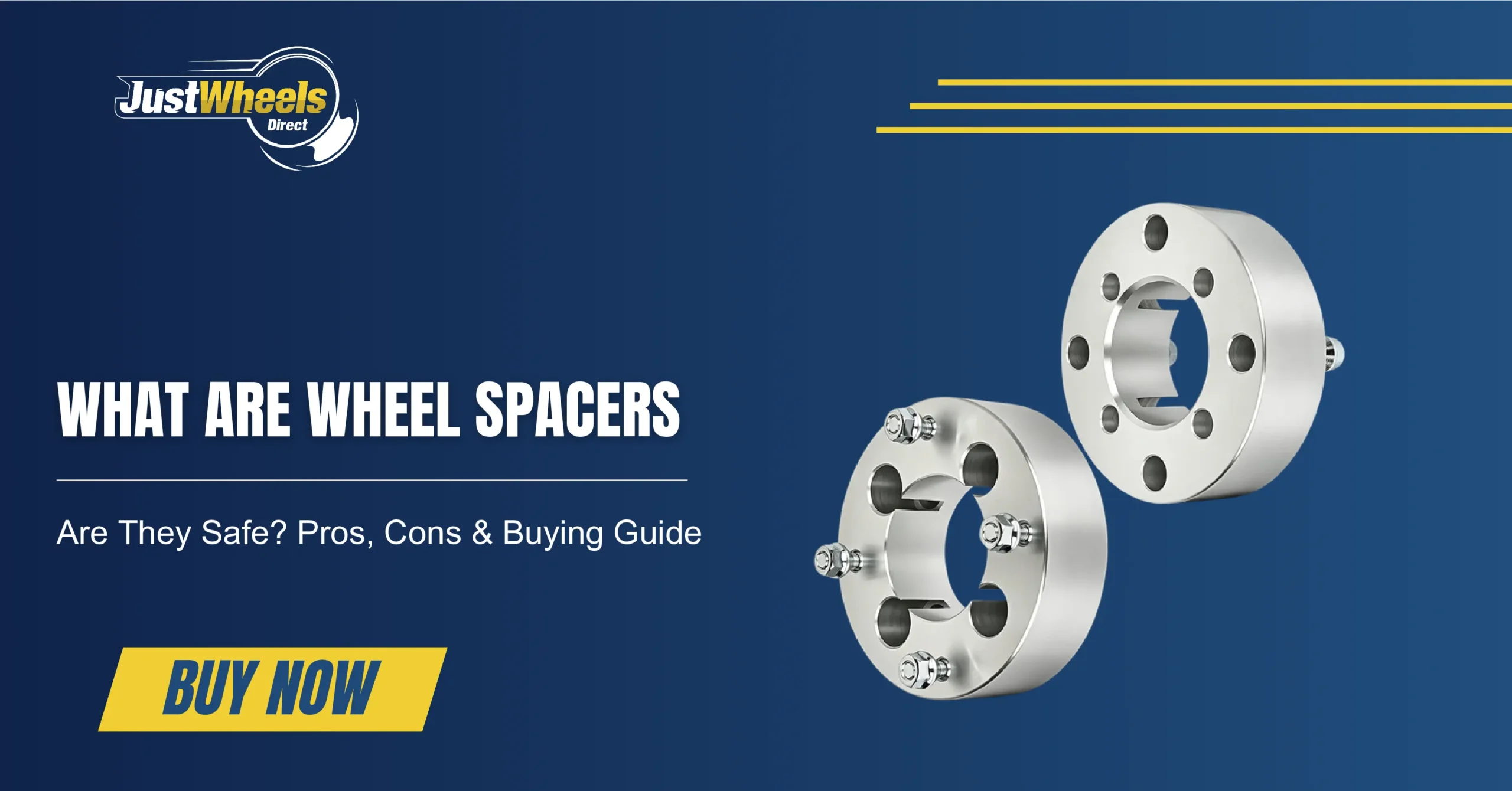
You want a wider stance or clearance for bigger tires. Wheel spacers keep coming up in your research.
Before you buy, you need to take a real look at the pros and cons of wheel spacers. Not just marketing claims from the brand selling them.
This guide covers safety, sizing, and cost in plain terms. We also cover thickness by use case, from street look to off-road clearance. You’ll leave knowing exactly what fits your vehicle and your goals.
Just Wheel Direct installs spacers and full wheel packages every week. That real-world experience shapes every recommendation in this guide.
Table of Contents
ToggleWheel Spacers Pros and Cons at a Glance
Weighing wheel spacers’ pros and cons start with understanding what the part actually does. A spacer pushes your wheel outward from the hub, without changing the bolt pattern. This creates more stance, more clearance, or both, depending on thickness.
Here is a simple breakdown before we go deeper into each point.
| Pros | Cons |
| Wider stance and improved look | Added stress on wheel bearings |
| More clearance for larger tires | Possible warranty complications |
| Often cheaper than new wheels | Requires correct torque and installation |
| Available in many thickness options | Cheap cast spacers can fail over time |
The Real Pros of Wheel Spacers
Spacers solve real fitment problems, not just cosmetic ones. Understanding the genuine benefits helps you decide if they fit your situation.
- Improved stance: A wider track often improves both looks and stability
- Tire clearance: Spacers can prevent rubbing when running larger tires
- Lower cost: Spacers are usually cheaper than a full new wheel set
- Flexible sizing: Thin and thick options fit many different goals
Many truck owners specifically use wheel spacers for bigger tires. A modest spacer can be the difference between rubbing and clean clearance. This makes spacers a practical fix rather than just a style upgrade.
The Real Cons of Wheel Spacers
The downsides are just as important as the benefits here. Ignoring them is how most spacer complaints and failures happen.
- Added bearing stress: Pushing the wheel out increases leverage on bearings
- Installation sensitivity: Incorrect torque is a leading cause of spacer problems
- Warranty questions: Some manufacturers scrutinize suspension claims after spacer installation
- Legal gray areas: Certain states regulate how far tires can extend past fenders
Thicker spacers amplify every one of these downsides. This is why the thickness choice matters as much as the decision to use spacers at all.
Are Wheel Spacers Safe?
Whether wheel spacers are safe is the question every buyer should ask first. The honest answer depends on quality, thickness, and installation, not the concept alone. A forged, hub-centric spacer installed correctly is generally a safe modification.
Problems trace back almost every time to cheap parts or poor installation. Cast spacers can crack under repeated stress, especially with heavy trucks or towing. Improper torque is the single biggest cause of spacer-related failures on the road.
Choosing a reputable brand and a qualified installer removes most of this risk. Safety here comes down to decisions you control, not the part itself.
Hub Centric vs Lug Centric Spacers
Hub centric vs lug centric spacers is a critical distinction for safety. A hub-centric spacer matches your hub’s exact bore diameter. This keeps the wheel centered on the hub, not just on the lug nuts.
A lug-centric spacer relies entirely on lug nuts for centering the wheel. This can introduce slight vibration if the torque is not perfectly even. Over time, that vibration can contribute to loosening or uneven tire wear.
Hub-centric spacers are the safer default for daily-driven vehicles. Lug-centric spacers are more common in cheap, universal fit kits online.
How Thick Should Wheel Spacers Be?
How thick wheel spacers should be depends entirely on your goal. A thin spacer solves small clearance issues with minimal added stress. A thick spacer creates a bigger stance change, but adds noticeably more strain.
Use this simple framework based on your actual use case.
- Street look, 0.25 to 0.5 inch: Subtle stance change, lowest added stress
- Moderate clearance, 0.75 to 1.25 inch: Fits slightly larger tires, moderate stress
- Off-road clearance, 1.5 to 2 inches: Maximum clearance, highest added stress
Going beyond 2 inches usually means a wheel adapter or a new wheel is smarter. At that thickness, the stress on bearings and studs becomes harder to justify.
Wheel Spacers for Bigger Tires
Wheel spacers for bigger tires are one of the most common reasons people buy them. A modest spacer, often under one inch, can prevent rubbing on slightly larger tires. This is especially common after installing a leveling kit or basic lift.
However, spacers alone cannot fix every clearance problem. If your tires are significantly larger, wheel offset and backspacing matter more than spacer thickness. In these cases, a properly offset wheel is often the better long-term fix.
Wheel Spacer Installation Cost
Wheel spacer installation cost varies based on spacer type and your vehicle. Parts typically range from fifty to two hundred dollars per axle, depending on quality. Labor adds a modest cost per wheel for proper mounting and torquing.
Bolt-on spacers generally cost more than slip-on spacers, due to added studs. Professional installation is worth the cost, given how much safety depends on correct torque. Skipping professional installation to save money is not worth the added risk.
Do Wheel Spacers Void Warranty?
Do wheel spacers void warranty is a common concern before buying. Most manufacturers only deny claims directly tied to the modification itself. A spacer causing a bearing failure could affect coverage on that specific part.
It typically does not affect unrelated coverage, like your engine or electronics. Still, checking your specific warranty terms before installation is a smart step. Keeping your factory wheels makes it easier to return to stock later if needed.
Slip-On vs. Bolt-On Spacers
Spacers generally come in two mounting styles, and the difference affects safety. Slip-on spacers use your factory studs and simply add thickness in place. They are easier to install but rely entirely on your original stud length.
Bolt-on spacers include their own studs and lug nuts, bolted separately to the hub. They add an extra mounting layer, which some installers consider more secure at thicker sizes. Bolt-on spacers are generally recommended once the thickness passes about one inch.
Choosing between the two often comes down to your target thickness and vehicle type. Thinner spacers work fine as slip-on, while thicker builds benefit from bolt-on strength.
How Spacers Affect Steering and Handling
Pushing the wheel further from the hub changes more than just looks. It increases the scrub radius, which is the distance between the steering axis and the tire contact patch. A larger scrub radius can make steering feel slightly heavier at low speed.
This effect is usually mild with thin spacers under half an inch. Thicker spacers can introduce a noticeable change in steering feel and returnability. Some drivers also report a firmer ride, since the suspension geometry shifts slightly outward.
None of these effects makes a properly installed spacer unsafe. They are simply trade-offs worth knowing before you commit to a thicker option.
Common Installation Mistakes to Avoid
Most spacer failures trace back to a small set of avoidable mistakes. Knowing them ahead of time protects both your vehicle and your safety.
- Skipping torque specs: Always torque to your vehicle manufacturer’s exact specification
- Not re-torquing: Check the torque again after the first fifty to one hundred miles
- Ignoring stud length: Confirm studs fully engage the lug nuts after adding thickness
- Mixing spacer brands: Stick to a matched, tested set rather than combining parts
A few extra minutes during installation prevent nearly every common spacer complaint. This is true whether you install spacers yourself or have a shop handle it.
Wheel Spacers, Vehicle Codes, and Inspections
Some states regulate how far a tire or wheel can extend past the fender line. California vehicle code, along with several other states, restricts excessive wheel poke. Spacers that push tires beyond the body can fail a safety inspection.
This is especially relevant for thicker spacers used for an aggressive stance. Before installing anything beyond a moderate size, check your local vehicle code. A quick look at inspection requirements can prevent a failed inspection later.
Best Wheel Spacers for Trucks
Best wheel spacers for trucks almost always mean hub-centric and forged construction. Trucks carry more weight and see more towing stress than typical cars. A cast spacer that holds up on a sedan can fail under truck-level loads.
Look for spacers with a clear load rating for your specific truck class. Forged aluminum hub-centric spacers offer the strongest combination of durability and fit. Avoid unbranded spacers with no listed weight rating or material specification.
Finding the Right Fit Without a Spacer
Spacers are not always the only path to the stance or clearance you want. In many cases, a wheel with the correct offset achieves the same result. This removes the extra part and the extra stress point entirely.
Our offset calculator lets you check fitment before you buy anything. Enter your vehicle and desired look, and see which wheel offsets actually work. This often reveals that a spacer is not even necessary for your goal.
Comparing both paths before buying saves time and often saves money too. A properly offset wheel can be a cleaner, longer-lasting solution.
Why Truck and Car Owners Trust Our Fitment Team
Just Wheel Direct looks at your full fitment picture, not just one part. Our team checks bolt pattern, offset, and hub bore before recommending spacers. We would rather point you to the right wheel than sell an unnecessary part.
Customers get honest guidance based on their actual vehicle and goals. We stock hub-centric spacers built for trucks, along with a wide range of wheel offsets. Our support team can walk you through your state’s vehicle code before you buy.
Try our offset calculator, browse wheel packages, or ask our team directly. We help you find the safest path to the stance or clearance you want.
Final Thoughts
Weighing wheel spacers’ pros and cons come down to quality, thickness, and installation. A hub-centric spacer, properly sized and installed, is generally a safe choice. Cheap cast spacers and poor installation are where most real problems begin.
Before you buy, check your state’s vehicle code and your specific use case. Just Wheel Direct can help you compare spacers against a properly offset wheel. Reach out to our team before your next tire and wheel upgrade.
Take a few minutes to run your numbers through our offset calculator first. It often clarifies whether a spacer, a different wheel, or both is the right call.
FAQs
What are the main wheel spacers' pros and cons to consider?
Pros include a wider stance and more tire clearance at a lower cost than new wheels. Cons include added bearing stress and the need for correct installation and torque.
Are wheel spacers safe for daily driving?
Yes, when they are hub-centric, properly rated, and correctly torqued. Cheap cast spacers or poor installation are the main causes of safety problems.
How thick should wheel spacers be for my truck?
It depends on your goal. Thin spacers suit a subtle look, while thicker spacers suit off-road clearance, though they add more stress on parts.
Do wheel spacers void my vehicle's warranty?
Usually, only coverage directly related to the modification, like a bearing tied to added stress. Unrelated systems, like the engine, typically stay covered.
Are wheel spacers legal in every state?
Not always. Some states, including California, restrict how far tires can extend past the fender. Check the local vehicle code before installing thicker spacers.