




Wheel Offset and Backspacing Calculator
Getting your wheel fitment right comes down to two numbers: offset and backspacing. Use our wheel offset and backspacing calculator below to convert between the two instantly, whether you have an offset measurement in millimeters or a backspace measurement in inches. Enter your wheel width and one known value to get an accurate result for your fitment.
Offset to Backspace Calculator
Use this calculator to find your backspace by entering your offset in millimeters and your rim width in inches. Backspace will display in inches.
See our fitment example below.
Backspace to Offset Calculator
Use this calculator to find your offset by entering your backspace in inches and your rim width in inches. Offset can be positive or negative.
See our fitment example below.
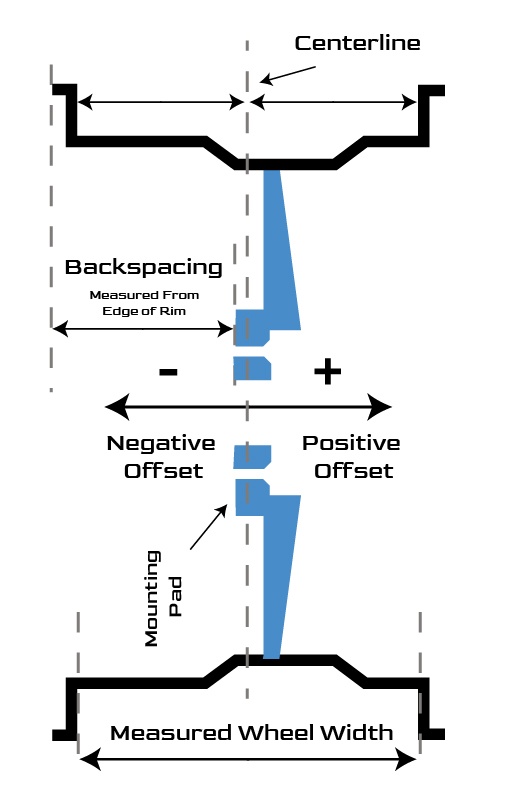
What Is Wheel Offset?
Wheel offset is the distance, measured in millimeters, between the wheel’s centerline and its mounting surface (the hub face). It determines how far in or out your wheel sits relative to your fender and suspension components. A small offset difference can noticeably change how a wheel sits on your car, which is why getting this number right matters before you order.
Negative Offset
A negative offset number means the mounting flange sits past the centerline of the rim, toward the inside of the car. Wheels with negative offset tend to poke out further from the fender, which is common on trucks and vehicles built for a wider stance.
Positive Offset
A positive offset number means the centerline of the mounting flange sits toward the outside of the rim. Most factory wheels on modern cars use positive offset, which tucks the wheel in closer to the suspension.
Zero Offset
Zero offset means the mounting pad centerline sits dead center in the rim, with the wheel positioned exactly in the middle between the inner and outer edges.
Backspacing vs Offset: How They’re Connected
Offset and backspacing describe the same physical relationship from two different angles, and you can convert between them using your wheel’s width. The formula looks like this:
Backspacing = (Wheel Width + 1) / 2 + Offset / 25.4
So for an 8 inch wide wheel with a 25.4mm offset, backspacing comes out to 5.5 inches, which matches the example above. If you already know your backspace and want offset instead, the calculator above handles that conversion in reverse, no manual math required.
How to Measure Wheel Backspacing Yourself
If you want to check backspacing on a wheel you already have, lay the wheel face down on a flat surface. Place a straightedge across the back lip of the wheel, then measure from the straightedge down to the mounting pad. That measurement is your backspacing in inches. It’s a simple check worth doing before you order new wheels if you’re not sure what your current setup measures.
Why Getting Offset and Backspacing Right Matters
The wrong offset or backspacing can cause a wheel to rub against your fender on the outside or your suspension and brakes on the inside. Too much positive offset (or too much backspacing) pushes the wheel in toward the car, risking contact with control arms or calipers. Too much negative offset (or too little backspacing) pushes the wheel out, which can cause fender rub or an aggressive poke look that some builds want and others don’t. Getting the right number before you buy saves you a return or a set of wheels that don’t fit.
Once you know your ideal offset or backspacing, browse our wheel collection to find fitment that matches your measurements, or check out our brand pages for specific styles built around common fitment ranges. If you’re not sure which offset your build needs, our team can help you figure that out before you order.
Frequently Asked Questions
What is the difference between offset and backspacing?
Offset measures the distance between a wheel’s centerline and its mounting surface in millimeters, and it accounts for both the inner and outer lip of the wheel. Backspacing only measures the distance from the mounting surface to the inner edge of the rim in inches. They describe the same wheel from different reference points, and you can convert between them if you know the wheel’s width.
How do I convert backspacing to offset?
Use the formula Backspacing = (Wheel Width + 1) / 2 + Offset / 25.4, or plug your numbers into the calculator above and it will do the conversion for you instantly.
What is a good backspacing for my wheels?
It depends on your vehicle and what you want the finished look to be. Most factory setups sit in a fairly narrow range for a reason, since too little backspacing risks rubbing on suspension and brake components, while too much can push the wheel out past the fender. Checking your vehicle’s factory offset range before ordering aftermarket wheels is the safest starting point.
Can I use offset and backspacing interchangeably?
Not directly, since they’re measured differently, but they describe the same wheel and can be converted between each other using your wheel’s width. Our calculator handles the conversion either direction.
How do I measure the offset on my current wheels?
Offset is usually stamped on the back of the wheel near the hub, often marked as “ET” followed by a number in millimeters. If it’s not stamped, you can calculate it from a backspacing measurement using the formula above.