




Staggered vs. Square Wheel Setup: Which Fitment Is Right for Your Car?

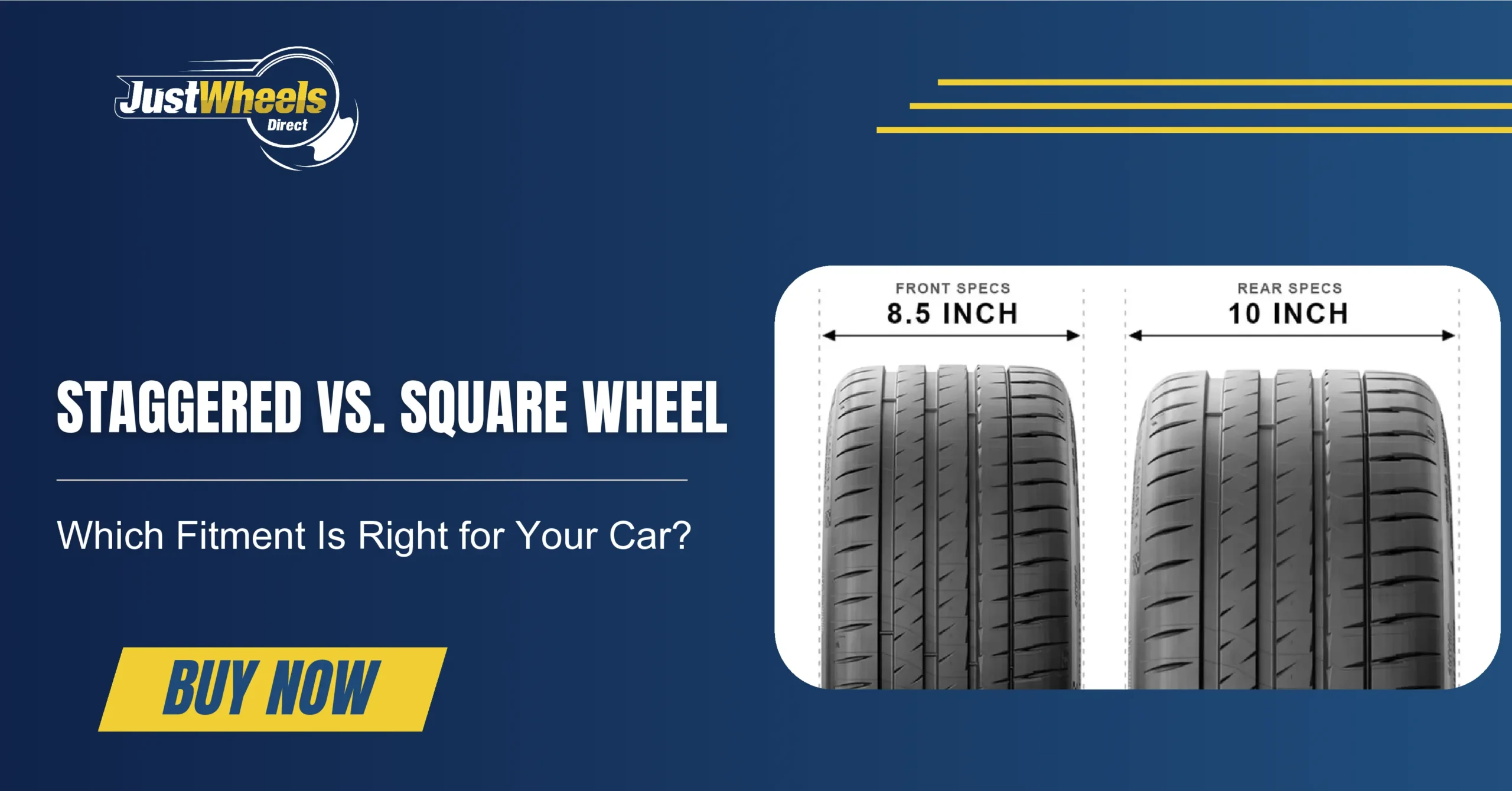
You’re picking your next set of wheels and tires. Now you’ve hit a fitting decision most guides gloss over. Staggered vs square wheels is not just a style choice. It affects handling, tire wear, and how you rotate tires later.
This guide breaks down both setups in plain terms. We cover drivetrain compatibility, cost, and specific vehicle tolerances. You’ll also learn where staggered setups can create real problems if chosen incorrectly.
Just Wheels Direct fits both staggered and square setups every week. That hands-on experience shapes the practical guidance in this article.
Table of Contents
ToggleStaggered Wheel Setup Meaning
The staggered wheel setup starts with one simple fact: the front and rear wheels differ. A staggered setup uses wider or larger wheels and tires at the rear. The front stays narrower, often with a smaller wheel diameter or tire width.
This design started on Rear Wheel Drive performance cars for a reason. A wider rear tire puts more rubber on the road during acceleration. That extra contact patch helps manage power without excessive wheel spin.
Staggered setups are common on muscle cars, sports cars, and many luxury sedans. They prioritize performance and aggressive looks over long-term tire flexibility. Enthusiast owners often accept the added maintenance in exchange for that performance benefit.
Square Wheel Setup Meaning
A square wheel setup uses identical wheel and tire sizes at all four corners. Front and rear tires match in width, diameter, and offset completely. This is the standard setup on most everyday cars, trucks, and SUVs.
Square setups exist because they offer practical, functional benefits over staggered fitment. Every tire wears the same way, since they all do the same job. This simplicity makes square setups easier to maintain over the life of your vehicle.
Staggered vs Square Wheels: The Core Comparison
Staggered vs square wheels ultimately comes down to your priorities as a driver. Staggered setups favor performance, cornering grip, and an aggressive visual stance. Square setups favor simplicity, tire longevity, and lower long-term maintenance costs
Here is a direct comparison to help clarify the trade-offs.
| Feature | Staggered Setup | Square Setup |
| Front and rear sizes | Different | Identical |
| Tire rotation | Limited or not possible | Full rotation possible |
| Common on | RWD performance cars | Trucks, SUVs, and most sedans |
| Tire wear pattern | Rear wears faster | Even wear across all four |
| Visual style | Aggressive, wide rear stance | Balanced, uniform look |
| Typical cost over time | Higher, due to rotation limits | Lower, due to even wear |
Staggered Wheels and AWD Vehicles
Staggered wheels AWD applications require extra caution compared to Rear Wheel Drive cars. All Wheel Drive systems rely on consistent rolling diameter across all four tires. A mismatch can confuse the drivetrain and create real mechanical stress.
Rolling diameter refers to the actual circumference of the tire as it rotates. If front and rear tires roll at different rates, the AWD system compensates constantly. Over time, this can wear down the center differential or transfer case.
Some AWD vehicles are engineered specifically for staggered fitment from the factory. Others are strictly square only, with no safe staggered option available. Always confirm your specific vehicle’s tolerance before choosing a staggered setup. A dealer service department or fitment specialist can usually confirm this in a few minutes.
Reverse Staggered Wheels
Reverse staggered wheels flip the usual pattern, putting larger wheels up front instead. This setup appears almost exclusively on Front Wheel Drive performance vehicles. A wider front tire helps manage power delivery through the drive wheels.
Reverse staggered setups are far less common than traditional rear-biased staggered fitment. They exist mainly on specific high-performance Front Wheel Drive models. If you’re unsure which direction applies, check your vehicle’s factory fitment specifications first.
Rolling Diameter Tolerances by Vehicle
Rolling diameter tolerance is the detail most competing guides skip entirely. Different vehicles allow different amounts of front-to-rear size variation safely. Getting this wrong can trigger drivetrain stress, even with a setup that looks reasonable.
Here are general tolerance patterns for a few commonly searched vehicles.
- Toyota Tacoma: Square setups strongly recommended due to part-time Four Wheel Drive
- BMW 3 and 5 Series: Staggered setups are factory standard and well supported
- Dodge Charger: Staggered fitment is common on RWD trims; avoid on AWD trims
- Subaru AWD models: Square setups required; staggered can damage the drivetrain
These are general patterns, not universal rules for every trim and year. Always confirm the exact tolerance using your owner’s manual or a fitment specialist.
Staggered vs Square Tire Rotation
Staggered vs square tire rotation is one of the biggest practical differences between setups. Square setups allow a full four-tire rotation, extending overall tread life. Moving tires front to back evens out wear across the entire set.
Staggered setups usually cannot rotate front to rear at all. Different sizes physically prevent swapping positions between the front and rear axles. Some staggered setups allow side-to-side rotation, but this offers limited benefit.
This means rear tires on a staggered setup often wear out faster. Budgeting for earlier rear tire replacement is a realistic part of staggered ownership.
How Staggered Setups Affect Handling?
A wider rear tire changes more than just the visual stance of your car. It increases rear grip relative to the front, which shifts overall handling balance. This can make the car feel more planted during hard acceleration out of corners.
Some drivers notice a trade-off in front-end feel with certain staggered setups. Steering response can feel slightly different compared to a matched square setup. This is generally a minor adjustment, not a safety concern, on properly fitted vehicles.
Track-focused and performance-oriented drivers often prefer this handling characteristic. Daily commuters usually notice less benefit, since hard cornering is rare in normal driving.
Cost Comparison Over Time
Staggered vs square wheels also differ significantly in long-term ownership cost. Square setups allow full rotation, which spreads wear evenly across four tires. This typically extends the useful life of the entire tire set.
Staggered setups concentrate wear on the rear tires, since rotation is limited or impossible. This often means replacing rear tires before the fronts are anywhere near worn out. Budgeting for two separate tire purchases over time is a realistic expectation.
Buying tires in pairs for staggered setups is common practice among experienced owners. This keeps handling balanced without paying for a full four-tire replacement each time.
Winter Tires and Staggered Setups
Winter tire season adds another layer of complexity for staggered setup owners. Many winter tire lines do not offer every staggered size a vehicle requires. This can force compromises in tire choice compared to a square setup.
Square setup owners generally have an easier time sourcing matching winter tires. A single size across all four corners means more availability and often better pricing. This is worth considering if you live somewhere with real winter driving conditions.
Some staggered vehicle owners switch to a square winter setup specifically to simplify this process. A dedicated winter wheel and tire package, sized square, can solve this seasonal challenge cleanly.
Does Staggered Wheels Void Warranty?
Does the ” staggered wheels void warranty concern exist before buying a new set? In most cases, factory-approved staggered fitment does not affect vehicle warranty. Problems arise mainly when staggered wheels are installed on a vehicle not designed for them.
This is especially relevant for AWD vehicles without factory staggered support. Installing a mismatched setup can lead to drivetrain damage claims being denied. Checking factory fitment guidelines before buying protects both your warranty and your drivetrain.
Best Staggered Wheel Brands
Best staggered wheel brands typically offer verified fitment data for popular performance vehicles. Look for brands that publish exact offset and width specs per axle position. This transparency helps avoid rolling diameter mismatches during setup.
Reputable brands also clearly label front and rear wheels, since they are not interchangeable. Avoid generic listings that do not specify which wheel goes on which axle. A fitment specialist can confirm brand compatibility with your specific vehicle before purchase.
Staggered Wheels and California Inspection Rules
Wheel setups rarely trigger inspection issues on their own, but tire condition does. California and similar states focus inspection attention on tread depth and tire condition. A staggered setup with uneven rear wear can fail inspection faster than a square setup.
This makes rotation planning even more important for staggered owners in inspection states. Regular tread depth checks help you replace rear tires before they become a problem. Square setups generally have an easier time maintaining consistent tread depth statewide.
Using a Fitment Calculator Before You Decide
Choosing between staggered vs square wheels is easier with real fitment data in hand. Our staggered wheel fitment calculator checks offset, width, and rolling diameter for your exact vehicle. This removes guesswork before you commit to either setup.
Enter your vehicle and intended use, whether daily driving or occasional performance driving. The calculator flags any rolling diameter concerns specific to AWD and All Wheel Drive systems. This step alone prevents most of the drivetrain issues staggered buyers run into.
Why Drivers Trust Our Fitment Team?
Just Wheels Direct fits staggered and square setups on a wide range of vehicles. Our team checks drivetrain type, factory tolerances, and rotation needs before any sale. We would rather steer you toward the right setup than sell the trendier option.
Customers get honest fitment guidance based on their specific vehicle and driving style. We stock wheels from brands that publish clear per-axle fitment data. Our support team can also confirm your vehicle’s AWD staggered tolerance before you buy.
We understand that this decision affects daily comfort, cost, and long-term maintenance. That is why we walk every customer through both options before they commit to either one.
Try our fitment calculator, browse wheel packages, or reach out to our team directly. We help you choose a setup that fits your car and your budget.
Final Thoughts
Deciding between staggered vs square wheels comes down to your vehicle and your priorities. Staggered setups offer performance and aggressive looks, with added cost and limited rotation. Square setups offer simplicity, even wear, and easier long-term maintenance.
Always confirm your vehicle’s rolling diameter tolerance before choosing staggered fitment. We can check this for you using real fitment data. Reach out to our team before your next wheel and tire purchase.
Both setups can be the right choice, depending entirely on your vehicle and driving habits. Taking a few minutes with a fitment calculator now can prevent costly mistakes later.
FAQs
What does staggered vs square wheels actually mean for my car?
Staggered means different wheel sizes front to rear, while square means all four match. The right choice depends on your drivetrain and whether you prioritize performance or tire longevity.
Can I run staggered wheels on an AWD vehicle?
Only if your vehicle supports factory staggered fitment. Mismatched rolling diameter on unsupported AWD systems can stress the drivetrain over time.
Does a staggered setup limit tire rotation?
Yes, in most cases. Different front and rear sizes usually prevent full rotation, which can cause rear tires to wear out faster.
Do staggered wheels void my vehicle's warranty?
Not if the setup matches factory-approved fitment. Installing staggered wheels on a vehicle not designed for them can risk drivetrain-related warranty claims.
How do I know if staggered or square is right for me?
Check your vehicle’s factory fitment guidelines and driving priorities first. A fitment calculator can confirm rolling diameter tolerance before you commit to either setup, and our team is always available to walk through the results with you.